
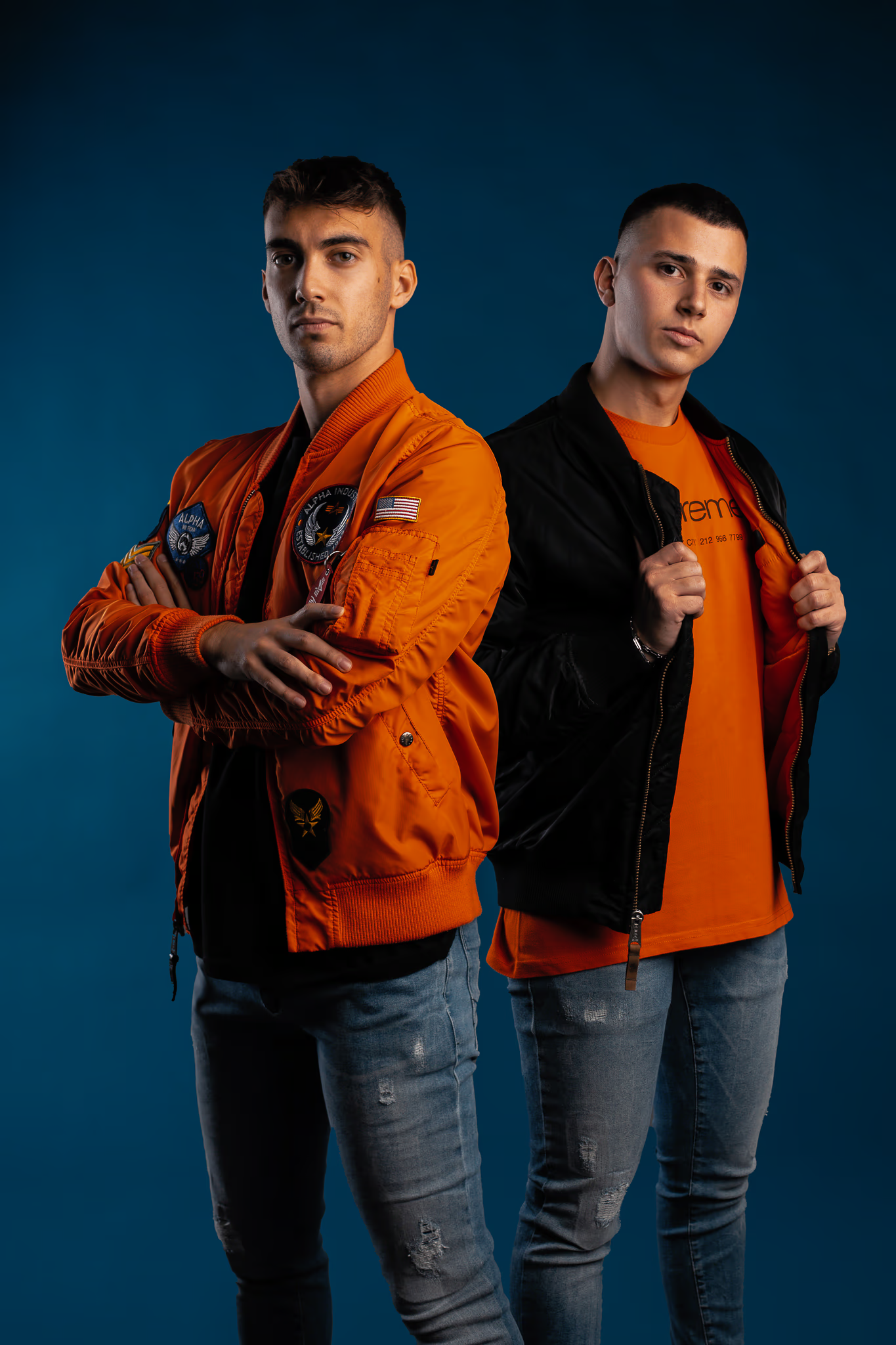
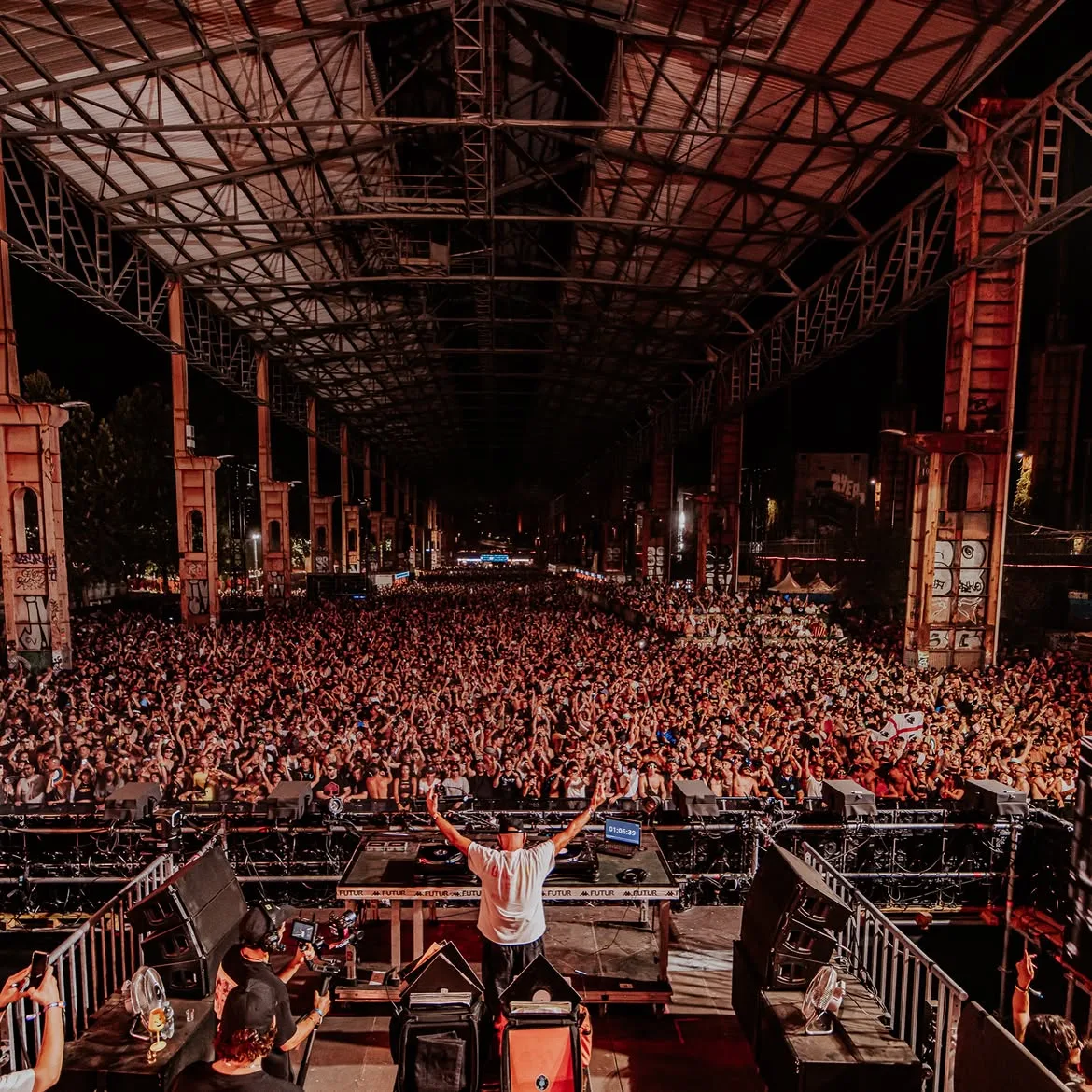
Twelve editors opening heavy video streams and photo catalogs at the very same moment, all off one storage, while outside the tent Skrillex plays to tens of thousands of people. That's the snapshot of the problem we solved at Kappa FuturFestival 2026 in Turin, where SEM Devs ran the media crew's data management: more than 80 TB of footage in three days, all to be secured and served, fast, to the people cutting while the event was still alive.
For us it's the second year running on this event. The invitation comes from Elephant Studio, the creative studio of Thomas Pizzinga and Madeleine Sabin that handles video production, sound design, photography and social content, and that once again brought us to Kappa to run the crew's data, alongside the friends we share the field with.
Parco Dora, six stages, over 130 artists
Kappa FuturFestival is one of the largest electronic music festivals in the world, and Italy's reference for techno and house. Its home is Parco Dora, Turin's former industrial site, where the old steel bays of the factories become the backdrop of the stages: a place recognizable the world over.
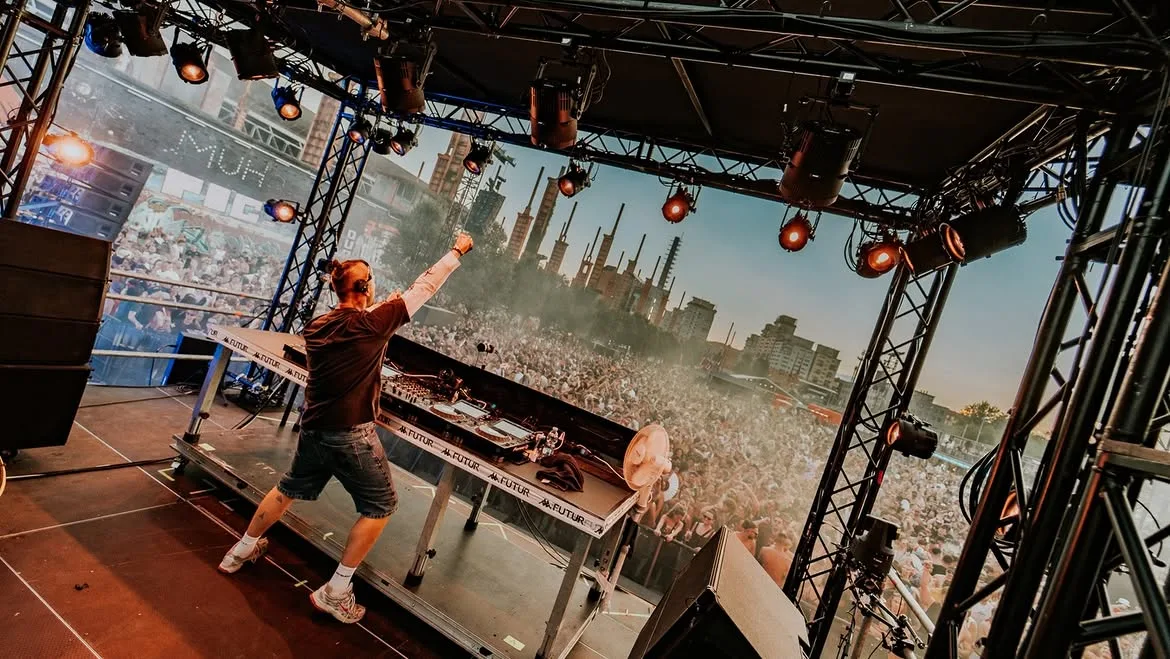
The 2026 edition ran from July 3 to 5, six stages and more than 130 artists on the bill. The booth featured headliners like Skrillex, Charlotte de Witte, Solomun and Four Tet, in front of a crowd from over 150 countries. Numbers that, from the media crew's side, mean just one thing: a river of very high-resolution footage that can't be reshot.
The real bottleneck isn't space, it's simultaneity
At an event this size the first instinct is to frame the problem as "how many terabytes do I have to keep". But space, on its own, is the easy part. The hard part at Kappa was another one: working on the same infrastructure at the same time were twelve professionals, video editors and photo editors, all reading and writing on the same storage at the same instant.
Twelve people pulling in parallel from the same volume will bring any traditional NAS to its knees: bandwidth saturates, response times collapse, and editors end up staring at a loading bar instead of cutting. And here time isn't negotiable: social clips go out while the festival is still on, not once it's over. On top of that sits the constraint that makes this different from any ordinary IT project: a set can't be reshot. Skrillex's footage exists only once.
The answer: an all-flash hot tier
To carry twelve people at once we sharply separated two needs that often get blurred: working speed and data safety. Speed was handled by an all-solid-state enterprise hot storage, NVMe drives: the hot volume the whole crew edited off, without a single spinning disk on the critical path.
The appliance was attached to the network over a 40 Gbit fiber link. With that bandwidth the twelve editors drew from the same storage as if each had a local SSD under their desk, except it was shared. Direct editing on the volume, at full speed, no local copies to move and no dead time.
Ingest: 80 TB brought in one card at a time
At the end of each shift every videomaker and photographer brought their cards to our desk. From there ran a structured offload: each card copied to the hot storage with integrity verification, for mathematical certainty that the written file was identical to the original, byte for byte. Consistent naming, folders by day, stage and author, one single source of truth instead of material scattered across dozens of personal cards. Over three days more than 80 TB passed through that desk.
Three copies of every file, always
Flash is blazing fast, but speed protects nothing on its own. So every file that landed on the hot storage was replicated onto two more independent NAS, each with its own verified copy. That's three copies of every asset at every moment of the festival, with no single point of failure. If one unit had failed, the other two were already in sync: the hot storage to run fast, the two NAS to sleep at night.
Why "a bigger NAS" solved nothing
In an office, storage on spinning disks and an overnight backup are more than enough. At Kappa they aren't. A single NAS forces a choice: optimize it for capacity or for bandwidth, but with twelve editors on it and clips due in hours you need both, together. Splitting a performance-tuned all-flash hot tier from safety-tuned NAS redundancy is exactly what lets you not choose.
How it went
For three days the media crew never stopped for a storage or bandwidth problem. The twelve editors worked in parallel on the same volume without stepping on each other, clips went out on time, and the number that really counts was clean at the end: more than 80 TB handled, no lost files.
The takeaway
In the end almost nobody saw Kappa's infrastructure, and that's exactly how it should go: when data management works, the only thing you notice is the absence of problems. Behind every reel that came out of that festival there was an all-flash hot storage, forty gigabit of fiber and three copies of every frame, built under pressure where a mistake can't be fixed the next day.
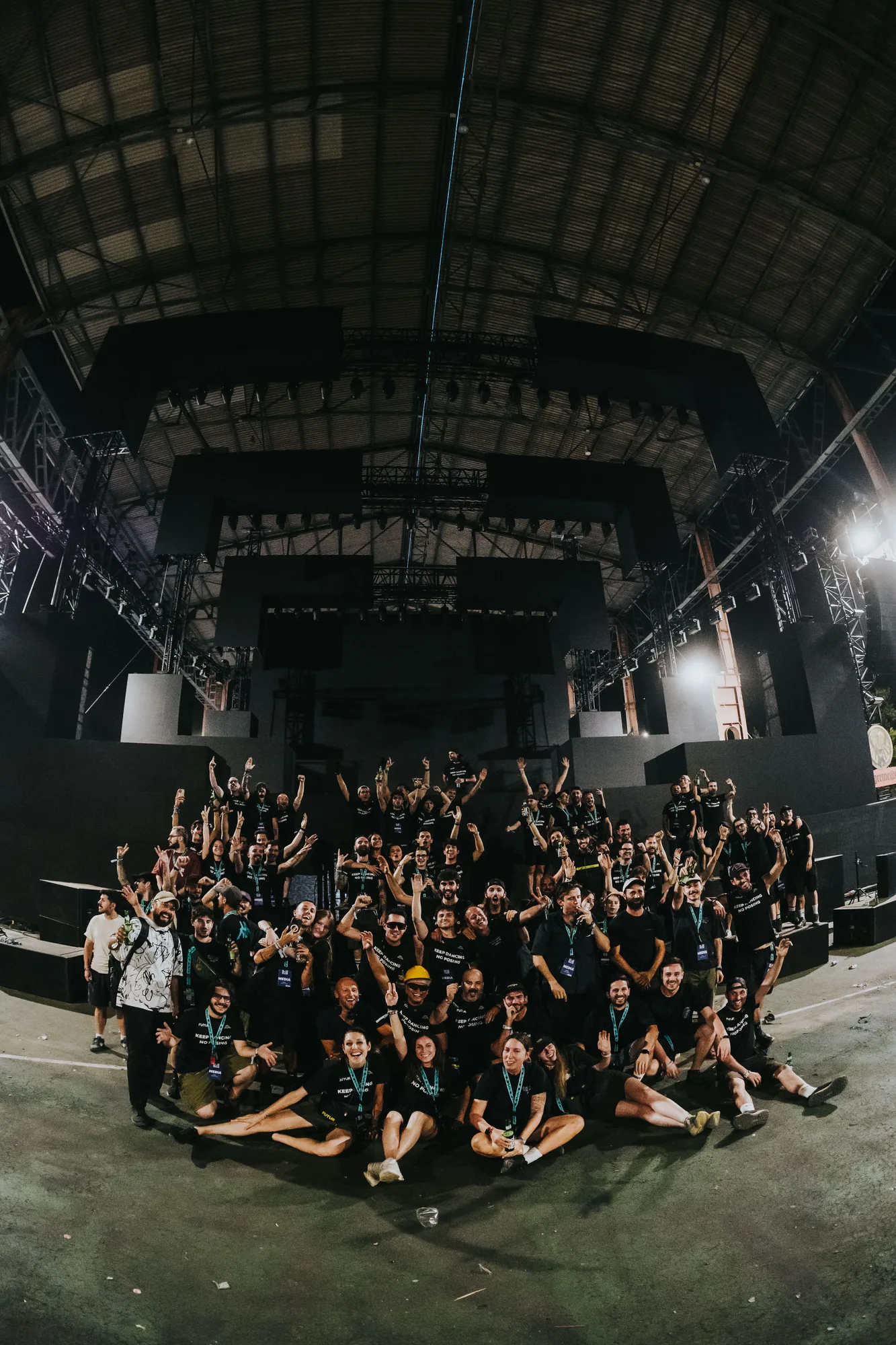
Thanks to Elephant Studio, to Thomas and Madeleine and to the whole crew for having us back on board: coming back for a second year, with the same people, is the best compliment they could pay us.
If you run an event, a production or an operation that generates critical, one-shot data, with several people who need to work on it at the same time, that speed-and-safety problem is probably yours too. We know how to design the answer.